Date marking and shelf life: the compliance most kitchens don't realise they're doing
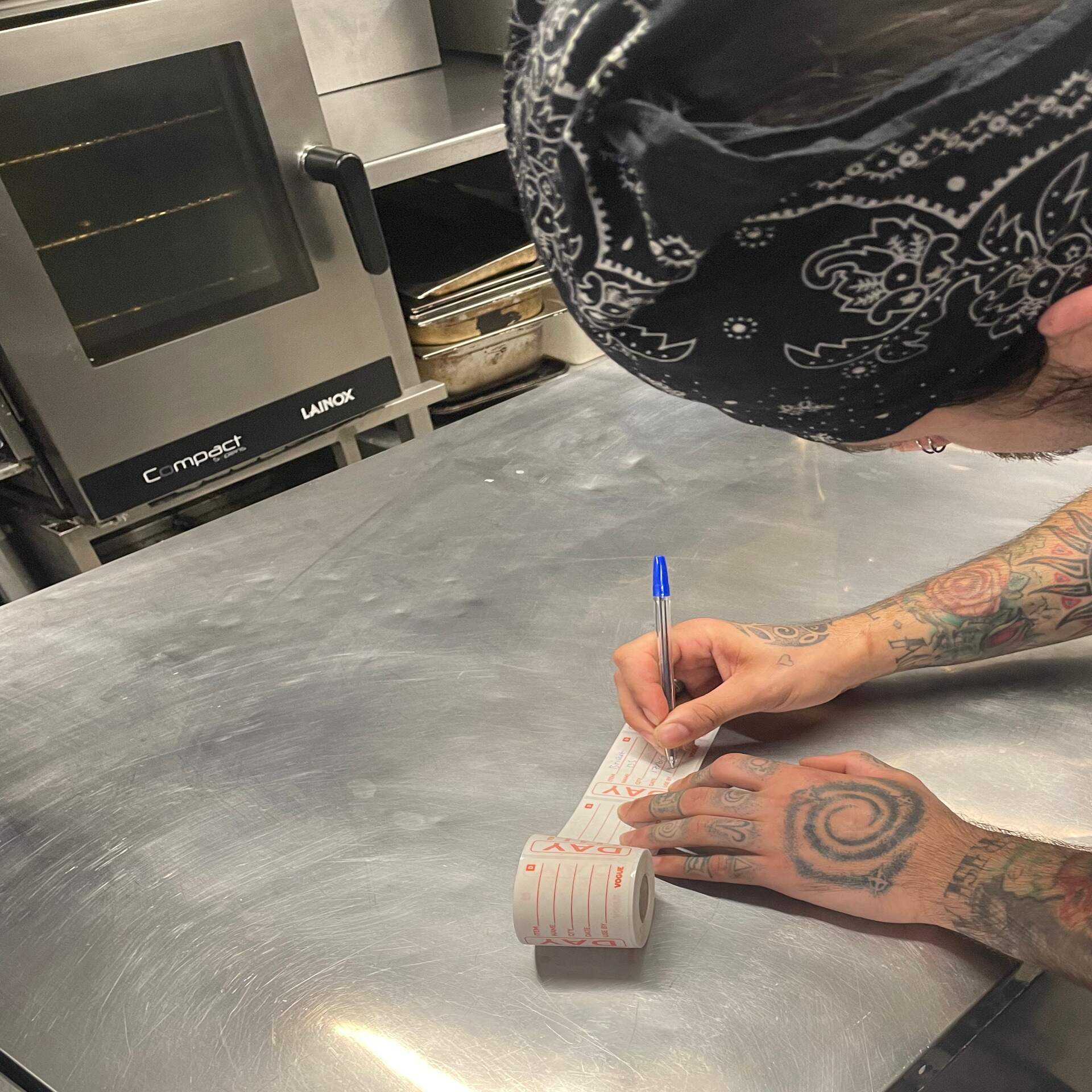
The moment you open a pack of food, decant it, cook it or prep with it, the date on the packaging stops applying. You are now entirely responsible for ensuring it has the correct date, and deciding that date is part of an extremely important food safety process.
This is what prep labelling actually is, at its core. Not admin, but the visible output of a series of safety decisions.
Use-by and best-before are not interchangeable
This is important to clarify first, because they're used loosely and they actually mean very different things. To find out more about the law behind food labelling, visit https://www.gov.uk/understanding-food-labelling/best-before-and-use-by-dates.
A use-by date relates to safety. It indicates the date after which a food is deemed unsafe, and is therefore normally applied to perishable products. Selling food after its use-by date is an offence.
A best-before date relates to quality. It tends to go on products whose texture or flavour may deteriorate after that date but which remain safe to eat, and so is more common on frozen, tinned, baked or dried foods.
The practical consequence: applying best-before to something that needs a use-by understates a safety risk, and applying use-by to something that only needs best-before creates avoidable waste.
Stop using "display until"
Under guidance from the Department for Environment, Food & Rural Affairs, food packaging should only carry either a use-by or best-before date. It discourages the use of sell-by and display-until labels as this can confuse consumers. Find out more about the updated guidance here.
Plenty of kitchens that sell PPDS (pre-packed food for direct sale) use display-until or sell-by dates to aid stock rotation, but it makes records harder to interpret for staff and for anyone inspecting. Use the two marks the law recognises, and those only.
Secondary shelf life: the bit nobody explains
Once a package is opened, the original date is no longer a reliable guide. Contamination can be introduced, and the conditions inside the food, such as acidity, water activity, temperature and gas atmosphere, may change in ways that affect microbiological safety.
The time limit you set after opening is called secondary shelf life, and setting it can be complex, with a number of influencing factors and information gaps.
“Two days from opening” is a widely used industry convention, not a legal rule, and it's a sensible default for many ready-to-eat items. It isn't a substitute for everything, some products need less, some can safely have more. It’s important to remember that secondary shelf life is the responsibility of the kitchen, not suppliers.
Storage method changes the answer
The same product prepped the same way has a different shelf life depending on what you plan on doing with it. Clingfilmed on a tray, vac packed, or straight into the freezer give three very different answers to the correct date question.
This is where handwritten labelling quietly fails. Not because anyone is careless, but because the person writing the label has to know which rule applies, recall the right number, and calculate a date, several dozen times a shift, at pace.
Vacuum packing deserves specific caution. Removing oxygen extends shelf life for spoilage purposes but creates conditions that favour non-proteolytic Clostridium botulinum, which is why FSA and ACMSF guidance addresses it directly. If you vac pack chilled ready-to-eat foods and give them a longer shelf life as a result, check the current FSA position before setting those dates. This is one of the areas where an incorrect shelf life carries a serious rather than a procedural risk.
Freezing and defrosting
Freezing pauses growth, but it doesn't reset anything.
Most pathogens survive frozen storage, recover during thawing, and can then grow or produce toxins if conditions allow. Additional contamination can also occur from hands, contact surfaces or other foods during handling.
So a defrosted item needs a new date set from the point of defrosting. Labl.it goes a step further, with the ability to add a defrost until time and date, so kitchens don’t accidentally use food before it has fully thawed.
What an EHO is looking at
Can you explain how you set your shelf lives?
Are your dates being applied consistently?
Does the label match what you told them?
Can you show what happened last week?
What happens to decanted and defrosted items?
Labelling records feed into the assessment of how you manage and document food safety. Since the top hygiene rating requires doing well in all three assessed areas, weak date-marking records can hold back your overall rating.
Where Labl.it fits
Labl.it calculates expiry automatically based on how the food is being stored, vac packed, clingfilmed, frozen and use-by or best-before is selected at the point of printing for PPDS (use-by only for prep labels), so the right mark goes on the right product.
The back office keeps a history of product amendments showing what changed and when, which is evidence that your shelf lives are actually being reviewed.
Expiry reporting flags what's approaching or past its use-by date, reducing waste.
Frequently asked questions
What's the difference between use-by and best-before?
Use-by relates to safety and is used on highly perishable foods; selling after it is an offence. Best-before relates to quality, and the food remains safe afterwards.
Who is responsible for the date on prepped food?
You are. Once a product is opened, decanted, cooked or prepped, the manufacturer's date no longer applies and the food business setting the new date is responsible for it.
Is there a legal two-day rule after opening?
No. Two days is a common industry convention rather than a legal requirement. The obligation is to set a shelf life you can justify for that product, which may be shorter or longer.
Can we use "display until" labels?
Better not to. The term isn't legally defined and guidance advises against it because it causes confusion.
Does freezing reset a use-by date?
No. Freezing pauses microbial growth but pathogens survive and recover on thawing. A defrosted item needs a new date set from the point of defrosting.
Do vacuum packed foods get a longer shelf life?
Sometimes, but removing oxygen creates conditions favouring non-proteolytic Clostridium botulinum. Check current FSA and ACMSF guidance before extending shelf life on vacuum packed chilled ready-to-eat foods.
How often should shelf lives be reviewed?
Regularly, with frequency based on product risk, and always after a change to recipe, ingredients, preparation method or storage.
What does an EHO want to see on date marking?
Evidence that dates are set on a documented basis, applied consistently, and recorded over time.
This is practical guidance, not legal advice. For definitive requirements on date marking and shelf life, see the Food Standards Agency at food.gov.uk, or Food Standards Scotland if you operate in Scotland.
Check your own rules
A quick audit: take five prepped items from your fridge and for each one ask yourself: where did this date come from and who decided it? If it’s difficult to answer either of those questions, consider bringing Labl.it into your kitchen.
Labl.it comes with a 14-day free trial. Load your own shelf-life rules and see whether the dates coming out match what your procedures say. If it isn't right for your kitchen, return it in the prepaid box at no cost.